The Podcast

Format

Hour-long conversations to explore what it would take for machines to develop qualities resembling human taste, and what the implications would be for creative individuals and for society.

We talk both to people with deep expertise in AI (researchers, entrepreneurs, investors) and to people in professions where taste is central (artists, designers, writers, critics, chefs, architects, curators).

Where to listen

Watch on YouTube, or follow the show on your favorite podcast app.

Your hosts

Bruno Marnette

Dr. Bruno Marnette

PhD in AI, University of Oxford. He has led applied machine-learning teams at Meta, co-founded venture-backed companies in learning technology and developer tools, and currently directs agentic automated research in a London-based AI lab. LinkedIn.

Philipp Zahn

Dr. Philipp Zahn

Economist; co-founder and CEO of 20squares, an R&D firm modelling digitally mediated markets and complex systems. Formerly assistant professor at the University of St. Gallen. His research and work center on automation and autonomous systems. philipp-zahn.com.

Episodes

Every conversation so far, newest first.

#858m

Seth Frey: AI should make itself obsolete

Philipp and Bruno speak with Seth Frey, a computational social scientist at UC Davis, about what it would mean for AI to make itself obsolete — why taste is knowing where you stand rather than what's right, how the raw material for forming it is shrinking as platforms close up, and the difference between summative work done for the output and formative work done to develop the person.

#758m

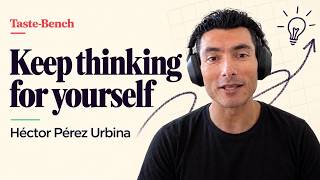
Héctor Pérez Urbina: Defending our Cognitive Sovereignty

Bruno and Philipp speak with Héctor Pérez Urbina — founder of Tlanextli Group, with a decade at Google and doctorates in AI and AI ethics from Oxford and Cambridge — about cognitive sovereignty: how excessive reliance on AI can weaken learning, creativity, and cultural diversity, and what more intentional use that preserves effort and independent thought looks like.

#655m

Arseny Zarechnev: The Micro-Decisions AI Make For Us

Philipp and Bruno talk with tech entrepreneur and self-described AI-pilled engineer Arseny Zarechnev about how AI is transforming software, creativity, and craftsmanship — and the concerns it raises about originality, human connection, and the value of hands-on work.

#554m

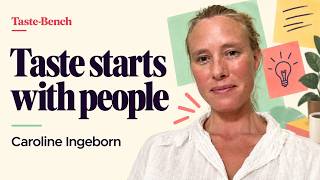
Caroline Ingeborn: How AI can set creatives free

Philipp and Bruno speak with Caroline Ingeborn, COO of Luma AI and former CEO of Toca Boca, about where taste lives when machines generate the pictures — why AI slop proves nothing about the machine, how Luma hires for taste, why the first hires matter most, and what forward-deployed creatives do instead of prompt engineering.

#41h 2m

Konstantin Adamopoulos: Every human is an artist

Philipp and Bruno speak with Konstantin Adamopoulos — a philosopher, art historian, and coach working between art and business — about what twenty years of forming judgment through art say about AI: why he rejects Silicon Valley's framing of taste as a learnable skill, how taste is entangled with privilege and perspective, and why tension, not clarity, carries the real information in organizations.

#350m

Andy Tyler: What it means for AI to "get it"

Andy Tyler joins the show to argue that taste in AI is less about aesthetics and more about “getting it”: understanding intent, making good choices, and acting with agency. The conversation spans AI's progress in image generation, coding, writing, and critique, and why AI is strongest when helping people explore ideas and make informed decisions.

#249m

Joshua Tan: AI Sovereignty Is Not Enough

Bruno and Philipp speak with Joshua Tan, interim CTO of Current AI, about public-interest AI, open-source infrastructure, and the politics of building alternatives to the frontier labs — including whether centralized models make writing, code, and design more uniform, and why today's systems work better as mirrors and thought partners than as replacements for human taste.

#11h 5m

Eleanor Warnock: AI Writing Is Glass

Bruno and Philipp speak with Eleanor Warnock, managing editor at Every, about why AI-generated writing often feels brittle, how AI tools can help writers without taking over the parts they care about, the gap between Silicon Valley and creative communities, Japan's alternative aesthetic traditions, and what Europe might contribute to AI beyond scale and infrastructure.